II.4) Shrines and miscellaneous constructions
|
|
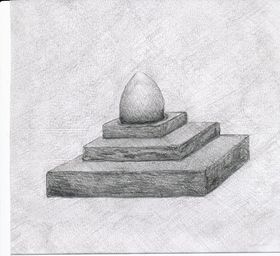
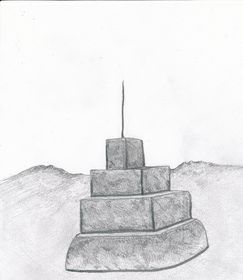
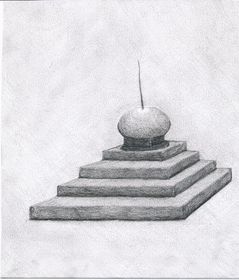
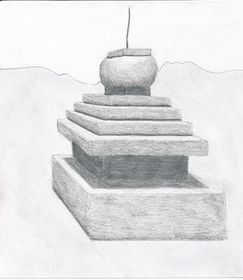
At a number of residential sites in Upper Tibet , there are the ruins of shrines that can be assigned to the archaic assemblage of monuments. These structures are found both outdoors and in caves used for habitation. Most of them appear to belong to the tenkhar, sekhar, lhaten, or lhatsuk classes of monuments, cubic or stepped tabernacles used to enshrine and propitiate indigenous deities. While forms of these monuments are still constructed today, according to Bön tradition, their origins can be traced to prehistoric times. Fairly well-preserved examples sheltered in caves are sometimes covered in a mud veneer and decorated with red and yellow ochre and lime pigments. The shrines have square or rectangular bases and were built of stone slabs and blocks. Some specimens may have had elaborate superstructures, as indicated by the depiction of archaic shrines in the rock art of Upper Tibet, but few traces remain. Archaic shrines can be distinguished from the ruined bases of chöten by the absence of overhanging masonry tiers, coursed-rubble stonework, etc. Also, unlike chöten, some archaic shrines were partly built underground. It is probable that a wide range of ritual functions and chronologies is indicated for this heterogeneous class of ceremonial monuments.
Only two sites surveyed to date are composed exclusively of shrines. Pangar Zhungkhang Gok (F-1) consists of six large cubic structures, situated on the edge of an extensive pastureland.1 It is possible that the limestone structures of Pangar Zhungkhang Gok represent an unknown type of above-ground tomb, as their construction is locally attributed to the ancient Mön. The celebrated monument known as Guru Bumpa (F-2), located in Purang, is maintained to the present day (it was partly destroyed in the Chinese Cultural Revolution). It consists of two large unmortared stepped structures chiefly built of cobbles tinted red with ochre. According to the local myth, the 8th century CE Vajrayāna hero Guru Rinpoché magically built these twin shrines in the amount of time it took for his disciple to prepare a pot of rice. Stepped shrines of the same form are a significant motif in Upper Tibetan petroglyphs and pictographs, all of which appear to predate the 13th century CE.2
|
|